Kristiansand museum ivaretar 40 bygg fra Kristiansand og omegn. Hva innebærer det å forvalte disse byggene, og hva er planene fremover?
Kristiansand Museum cares for 40 buildings from Kristiansand and the surrounding areas. What does it mean to manage these buildings, and what are the plans going forward?
Begynnelsen
Museets samling av bygninger hadde sin start under folkeromantikken, da det var stor interesse for å bevare gamle norske tradisjoner. Det som i senere tid har blitt Kristiansand museum het den gangen Vest-Agder fylkesmuseum, og skulle favne om store deler av Agder. Hus ble hentet fra Setesdal, Eiken og andre deler av Agder for ivaretagelse og formidling. Senere ble også bygninger fra kvadraturen i Kristiansand hentet inn, og i dag rommer museet 40 bygg.
Det er museets oppgave å ivareta disse bygningene for fremtiden så godt det lar seg gjøre. Ivaretagelsen muliggjør også den autentiske historiefortellingen av hvordan det var å bo i disse husene – der besøkende selv kan bevege seg inn i de mange stuene.
The Beginning
The museum’s collection of buildings began during the era of National Romanticism, when there was great interest in preserving old Norwegian traditions. What later became Kristiansand Museum was at that time called Vest-Agder County Museum, and it was meant to cover large parts of Agder. Buildings were brought in from Setesdal, Eiken, and other parts of Agder for preservation and presentation. Later, buildings from the Kvadraturen district in Kristiansand were also moved to the museum, and today it houses 40 buildings.
It is the museum’s task to look after these buildings for the future as well as possible. This preservation also makes it possible to tell authentic stories about what it was like to live in these houses, where visitors can step inside the many rooms themselves.
Hvordan ivaretas byggene?
Kunnskapen om hvordan man ivaretar antikvariske bygg har utviklet seg. Byggene som i dag står i bygata hadde også en annen status da de ble flyttet hit. Mens vi i dag anser dem som verneverdige bygg, ble de den gangen behandlet som kulisser for formidling. Museet har heller ikke hatt de beste rammene for jevnt vedlikehold, en nødvendighet som vi er mer bevisst på i dag. Byggene krever jevn oppfølging! Kunnskap om bevaring av antikvariske bygg har også utviklet seg, og mye av dagens arbeid går ut på å rette opp eldre arbeid som er utført på byggene. For eksempel har bruken av nye bygningsprodukter som man trodde ville være bra for bygningene da de ble satt opp igjen på museet ført til flere problemer. Vi jobber i dag for å tilbakeføre byggene til sin opprinnelige form, både med tanke på materialbruk og tekniske løsninger. Ofte viser det det seg at det enkle er det beste!
How are the buildings preserved?
Knowledge about how to care for historic buildings has developed over time. The buildings that now stand along the museum street had a different status when they were moved here. While we today consider them worthy of protection, back then they were treated more like stage sets for storytelling. The museum has also not always had the best conditions for consistent maintenance – something we are much more aware of today. These buildings require regular attention!
Knowledge about the conservation of historic buildings has advanced, and much of today’s work involves correcting older repairs that were done on the buildings. For example, the use of new building products that were once thought to be good for the structures when they were re-erected at the museum has caused several problems. Today we are working to return the buildings to their original form, both in terms of materials and technical solutions. It often turns out that the simple solution is the best!
Årshjulet og planer fremover
Det er i dag en utfordring å planlegge årshjulet for bevaring. For å minske løpende vedlikehold prioriterer museet større prosjekter der vi kan gjøre mer grundig istandsettelser og sikring av byggene, samtidig som vi går for bærekraftige og grønne løsninger.
The Annual Cycle and Future Plans
Planning the annual cycle for preservation is currently a challenge. To reduce ongoing maintenance, the museum is prioritising larger projects where we can carry out more thorough restoration and securing of the buildings, while also choosing sustainable and environmentally friendly solutions.
Nomelandsloftet:
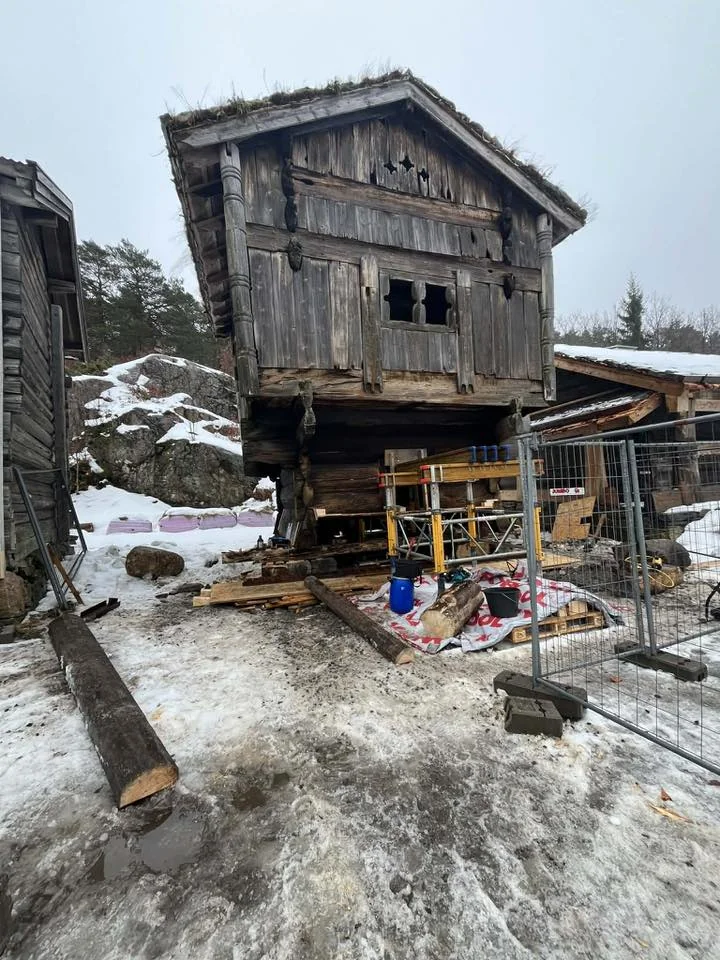
I forbindelse med utskiftning av svillstokken i Nomelandsloftet, skal bygget jekkes. Vi har nå satt i gang med selve jekkingen.
Nomelandsloftet er et tre etasjens loft fra ca. 1580. Tre etasjes loft var sjeldne, og Nomelandsloftet har derfor hatt en høy status i bondesamfunnet. Vi skal erstatte den ene svillstokken i bygget, samt reetablere mur foran bygget, slik at Nomelandsloftet, årestua fra Kveste og loft fra Kveste vil få en felles mur. I Setesdal har det vært vanlig at loft og stue har hatt felles platting.
In connection with the replacement of the sill beam in Nomelandsloftet, the building is being jacked up. We have now started the actual jacking process.
Nomelandsloftet is a three-storey loft from around 1580. Three-storey lofts were rare, and Nomelandsloftet therefore held a high status in the farming community. We are going to replace one sill beam in the building and re-establish the wall in front of the building, so that Nomelandsloftet, the Kveste hearth room (årestua), and the Kveste loft will share a common wall. In Setesdal it has been common for the loft and the living room to share a platform.
Stallen fra Rike i Setesdal:
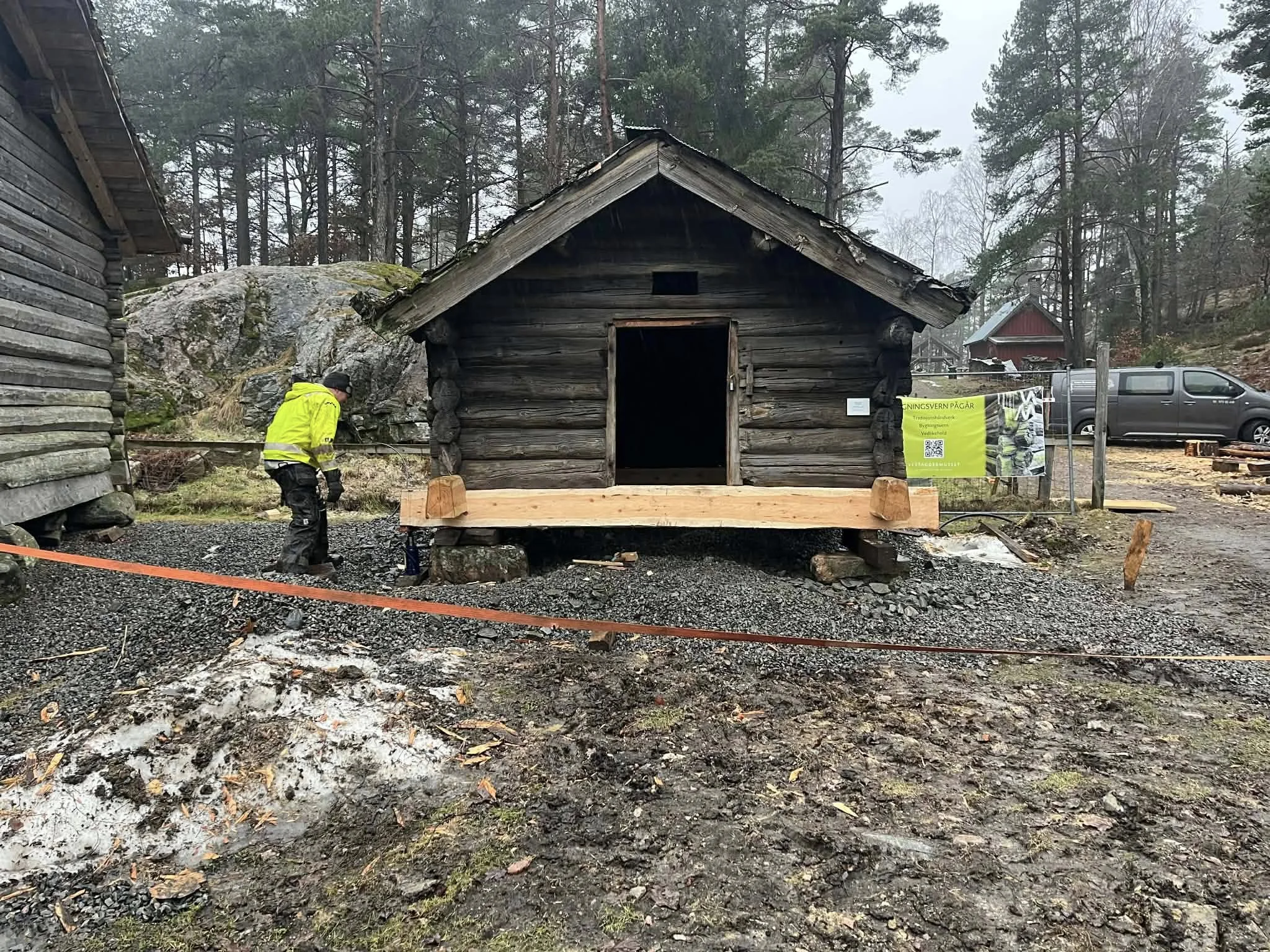
Stall fra Rike, bygget ca. 1800, er nå flyttet tilbake til sin opprinnelige plass, etter at vi har drenert grunnen og den har fått ny syllstokk. Det skal bygges opp ny mur og legges nytt tak. Fasaden er nå vendt mot tunet, slik som har vært vanlig praksis tuna fra Setesdal.
The stable from Rike, built around 1800, has now been moved back to its original position after the ground was drained and it received a new sill beam. A new wall will be built and a new roof will be laid. The facade is now facing the courtyard, as was the traditional practice in Setesdal farmyards.
Mørchs Paviljong
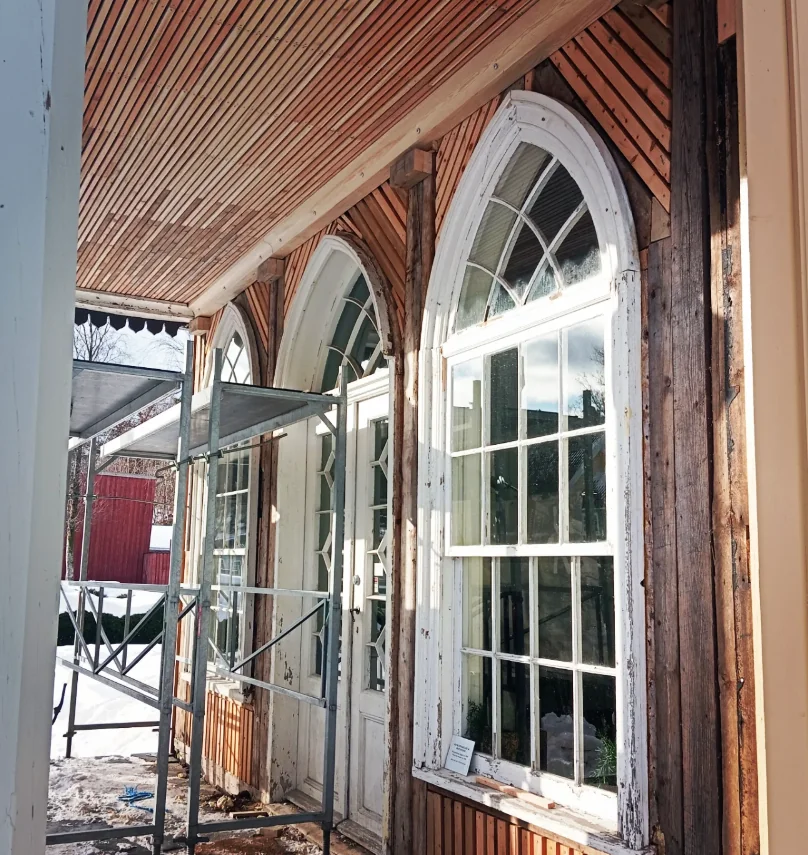
Our museum craftsman, David, has started removing the mouldings and pilasters on Mørch’s Pavilion at the museum.
The goal is to remove the chipboard panels from the 1980s and see if there are any traces of how the building originally looked. In short, a little detective work is underway!The old parts that are taken down are given a bit of love and simple wooden repairs – with as minimal intervention as possible.
There will be a bit of mess, but we promise it’s going to look fantastic in the end!